Research
1. Thermochemical Evolution of Continental Lithosphere (PhD)
- Duration: January 2026 to present
- With: Dr. Ajay Kumar
Details coming soon. Sorry.
2. Global Moho Compilation and Thermodynamic Datasets (Project Assistant)
Duration: August 2024 to July 2025
With: Dr. Ajay Kumar
I developed thermodynamic datasets from mineral assemblages at various depths using Perple_X, applying them to convert seismic tomographic velocities into temperature estimates for the crust and shallow mantle. The datasets include Vp, Vs, and density for temperatures of 273–1573 K and pressures up to 15 GPa.
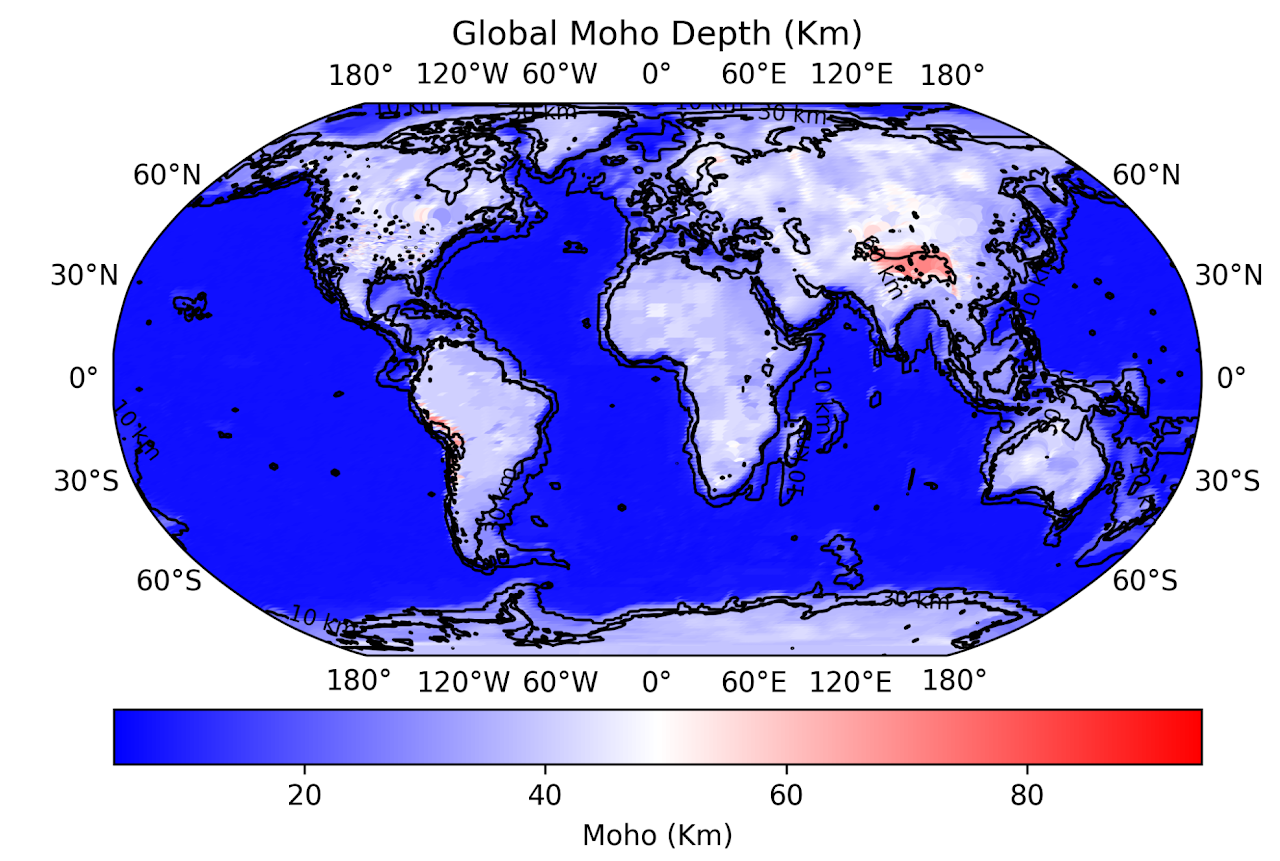
As a parallel component of this project, global crustal thickness data was compiled from receiver-function studies and Crust1.0. Using Fatiando a Terra's Verde spline interpolation, I transformed this compilation into a high-resolution gridded global Moho-depth dataset ready for integration with Python, GMT, and other computational workflows.
For references or access to the grid file, please contact me through the Contact page. Additional details and the corresponding GitHub repository will be added as the project webpage develops.
3. Effect of Hydration on the Iron Spin Crossover in Bridgmanite (MS Project)
Advisor: Dr. Gaurav Shukla, Department of Earth Sciences, IISER Kolkata, India
Duration: 2023–2024
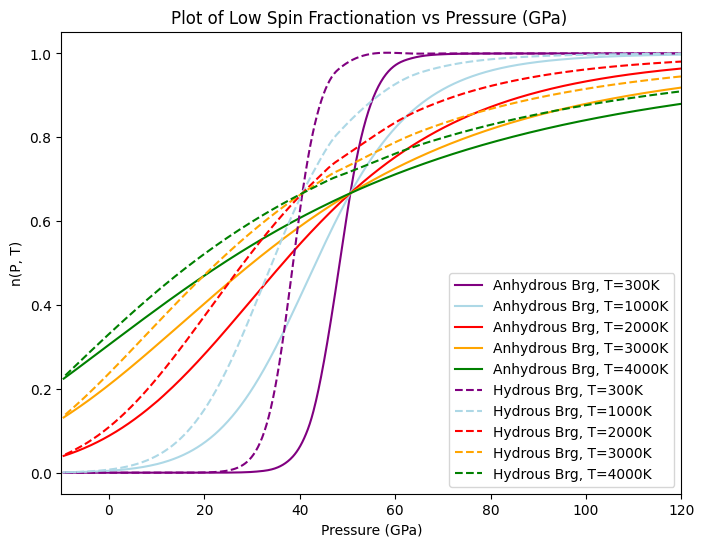
Bridgmanite is the most abundant mineral in the Earth's lower mantle, and the spin crossover of iron in Fe3+-bearing bridgmanite is a key factor affecting the compressibility, sound velocity, and thermal structure of the system.
The phase transition in anhydrous bridgmanite is a well-established phenomenon, but relatively little is known about what happens in hydrous systems. Here, I calculated the equations of state of Fe(III)-bearing hydrous bridgmanite to study its structural and elastic properties in the lower mantle using first-principles density functional theory (ab initio DFT).
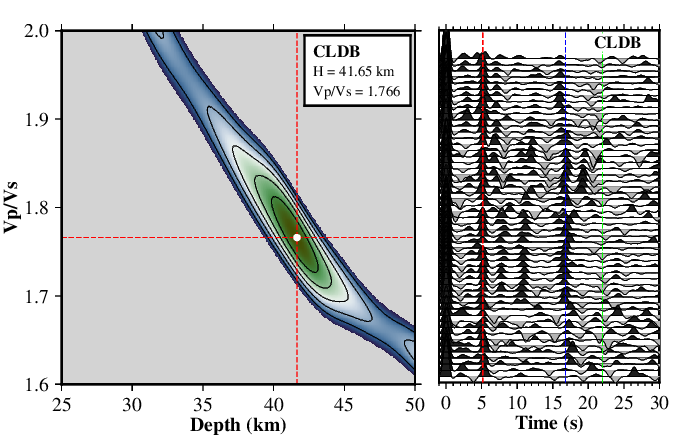
4. Crustal Evolution of Different Archean Cratons Using Receiver Function Analysis Implementing H-K Stacking and Joint Inversion (Semester Project)
Advisor: Dr. Kajaljyoti Borah, Department of Earth Sciences, IISER Kolkata, India
Duration: 2022–2023
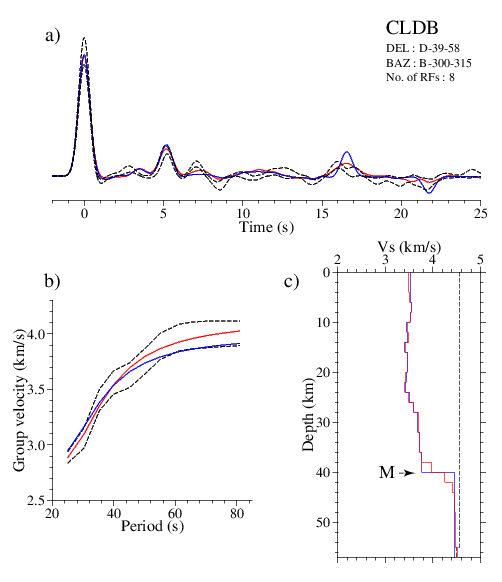
I studied the crustal evolution of different Archean cratons using receiver function analysis. I used conventional P-RFs for modeling these receiver functions with H-K stacking and Joint Inversion.
I used surface-wave dispersion data (global dispersion data collected from GMD52) together with receiver functions to construct forward models and establish a better understanding of crustal depth–velocity structure. This global optimization provided constraints on the Moho in different cratons.
Linking the Moho discontinuity with its depth and velocity structure emphasized the similarities and differences in crustal structure globally, contributing to our understanding of lithospheric formation and evolution on a global scale.
5. Studies on GNSS Pseudorange and Carrier Phase Residuals for Data Quality and Antenna Location Assessment (Internship)
Advisor: Dr. Anindya Bose, GNSS Lab, Department of Physics, The University of Burdwan, India
Duration: 2019 & 2021
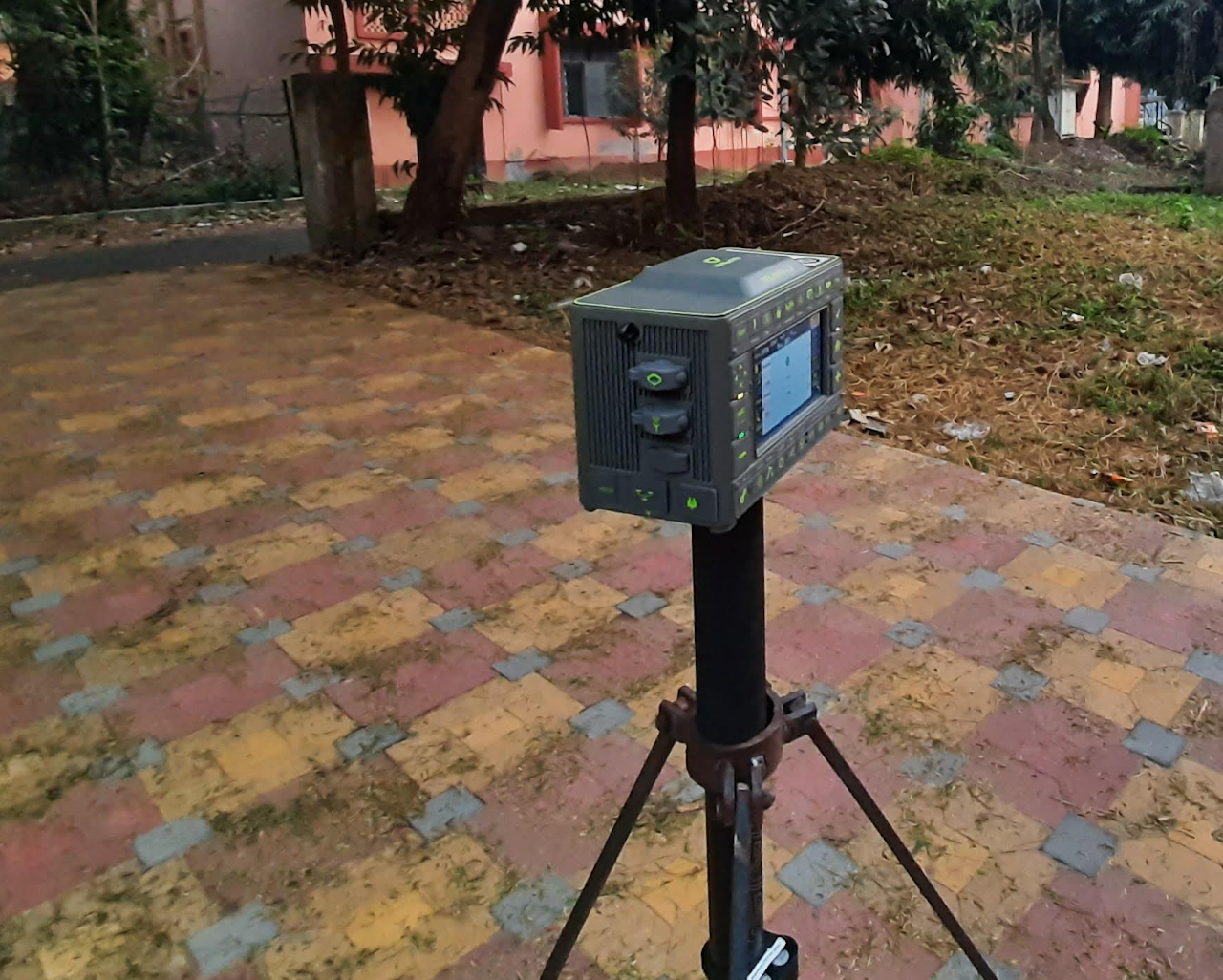
In 2019, I worked on Precise Point Positioning (PPP) using GNSS pseudorange and carrier-phase residuals. At first, I studied GNSS pseudorange and carrier-phase residuals for data quality and antenna location assessment. I also compared the data quality between one high-cost (JAVAD) and one low-cost receiver (u-blox F9P).
In 2021, the work was associated with an ongoing project entitled “Applicability of Compact GNSS Modules in Real Time Improvement of Position Accuracy for Test Range Applications”, sponsored by DRDO Integrated Test Range (ITR), Chandipur, Balasore.
I compared GNSS Precise Point Positioning using data collected simultaneously from four different receivers (two high-cost and two low-cost) and compared their performance using different online processing platforms on three different occasions: Rapid (instantaneously), 3-day delay, and 15-day delay.